
How Do We Adapt Photovoice to Ensure Everyone Can Use It?
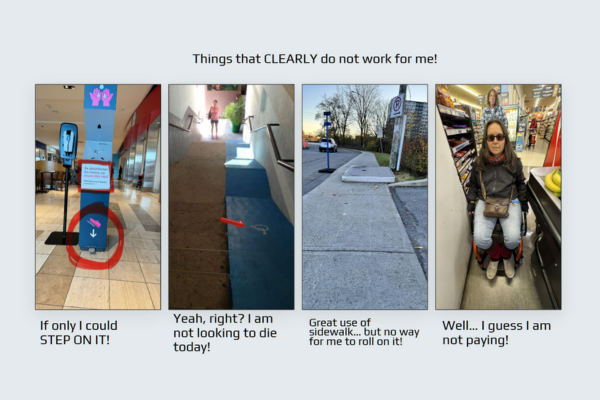
Photovoice is a powerful research tool—but traditional photovoice excludes many people with disabilities. We had to rethink everything.
The Problem With "Traditional" Photovoice
Standard photovoice methodology asks participants to:
Take photographs with a camera
Write captions describing what they photographed
Attend in-person group discussions
Present their photos to policymakers
Sounds straightforward, right?
But think about who this excludes:
People with visual disabilities (can't take or view photos)
People with dexterity differences (struggle with camera operation)
People who don't communicate through writing
People who can't attend in-person meetings
People whose disabilities fluctuate (can't commit to fixed schedules)
People who face communication barriers
If we used traditional photovoice, we'd perpetuate exactly what we're trying to study: inaccessibility.
Our Adaptations: Multiple Pathways to Participation
BEYOND PHOTOS: MULTIPLE DOCUMENTATION FORMATS
Instead of requiring photographs, we accept:
Photos: For those who can and want to use cameras
Smartphone photos
Camera photos
Screenshots
Images taken by support people with participant direction
Voice Recordings: For those who prefer speaking
Audio descriptions of environments
Narrated experiences
Voice memos about barriers
Recorded observations (up to 2 minutes)
Written Descriptions: For those who prefer text
Typed descriptions
Notes about experiences
Detailed accounts
Short-form or long-form writing (up to 500 words)
Voice Captions: Accessible alternative to writing
Audio explanations of photos
Spoken descriptions
Narrated context (up to 1 minute)
Why this matters:
A parent with low vision can describe a barrier without photographing it
A parent with chronic fatigue can record brief voice notes instead of writing
A Deaf parent can submit photos without audio
A parent with hand pain can speak instead of type
ANY COMBINATION WORKS
Participants can mix and match:
Photo + voice caption
Written description only
Recording + follow-up photo
Whatever makes sense for each situation
One participant might submit mostly photos with occasional voice memos. Another might use primarily written descriptions. Both are equally valuable.
FLEXIBLE PARTICIPATION TIMELINES
Traditional photovoice: Everyone submits at the same time
Our approach: You submit when you can
Why?
Disability experiences aren't predictable
Pain flares, energy crashes, and symptom changes happen
Caregiving demands fluctuate
Access to federal spaces varies
Flexibility looks like:
Rolling submissions throughout the year
No penalties for "late" submissions
Extensions available without explanation needed
Opportunity to add materials if you encounter new situations
TECHNOLOGY CHOICES GUIDED BY ACCESS
Platform requirements:
✓ Mobile-friendly (people use phones, not just computers)
✓ Screen reader compatible
✓ Works with voice-to-text
✓ Simple, intuitive interface
✓ Low bandwidth option (not everyone has high-speed internet)
✓ Offline capability (can prepare submissions without connection)
We chose Qualtrics because:
• Meets accessibility standards
• Participants already familiar from other surveys
• Allows multiple file types
• Works across devices
• Secure and confidential
Support available:
• Tech troubleshooting
• Help uploading files
• Alternative submission methods if platform doesn't work
• Human support, not just FAQs
INTERVIEWS ADAPTED TO PARTICIPANT NEEDS
Traditional photovoice: In-person group meetings
Our approach: Whatever works for you
Interview options:
• Video call (Teams, Zoom, etc.)
• Phone call (no video required)
• In-person in your community
• Asynchronous written exchange
• With support person present
• In participant's first language
Accommodations provided:
• ASL interpretation
• Translation services
• Extra time
• Breaks as needed
• Rescheduling without penalty
• Questions provided in advance
FOCUS GROUPS REDESIGNED
Traditional photovoice: Everyone in one room, discussing together
Our challenge: How do we maintain group benefit while honoring access needs?
Solutions:
• Virtual options (no travel required)
• Groups organized by disability type (shared context)
• Smaller groups (6-8 people, not 20)
• Multiple sessions (can't make one time? Try another)
• Alternative participation (written input if can't attend live)
Group discussion supports:
• Visual aids for Deaf participants
• Audio description of photos for blind participants
• Chat function for people who prefer typing
• Breakout rooms for overwhelm prevention
• Clear facilitation with space for everyone
WHAT WE'RE STILL LEARNING
Despite our adaptations, we know we're not perfect:
Current challenges:
• How to support parents with intellectual disabilities who want photos described to them
• Making sure voice recordings are accessible to Deaf participants
• Balancing detail with brevity for people with cognitive access needs
• Ensuring people with limited internet access can participate fully
What we're trying:
• Offering to read written descriptions aloud and record them
• Providing transcripts of all audio
• Creating simplified summaries of complex materials
• Offering to mail USB drives instead of requiring digital upload
Questions we're sitting with:
• Are we unconsciously favoring certain types of participation?
• Do our "flexibility" options actually feel flexible to participants?
• What barriers are we still not seeing?
Adaptation Is Ongoing, Not One-Time
We didn't finalize our methods and lock them in. We're:
Continuously checking:
• Are people actually able to participate?
• What's working? What's not?
• Where are people dropping out, and why?
• What do participants say they need?
Staying open to change:
• If participants tell us something isn't working, we change it
• We add new options when people suggest them
• We remove requirements that create barriers
• We learn from mistakes
Building accountability:
• Steering committee reviews our methods
• Participants can give feedback anonymously
• We share what we're learning on this blog
• We report honestly about what's hard
Why This Matters Beyond Our Project
Adapted photovoice isn't just about our research being more inclusive (though that matters). It's about:
Proving it's possible: Researchers can't say "photovoice isn't accessible" anymore—we're showing how to do it differently.
Creating a model: Other research teams can use and improve our adaptations.
Shifting expectations: Participants with disabilities should expect research to adapt to them, not vice versa.
Honoring expertise: Parents with disabilities know what they need—we just have to listen and respond.
The Goal: Participation Without Barriers
We want every parent with a disability who wants to participate to be able to participate fully—not through heroic individual effort, but because we built a process that works for them.
That's what truly adapted photovoice means.
