
Notre Méthodologie de Recherche
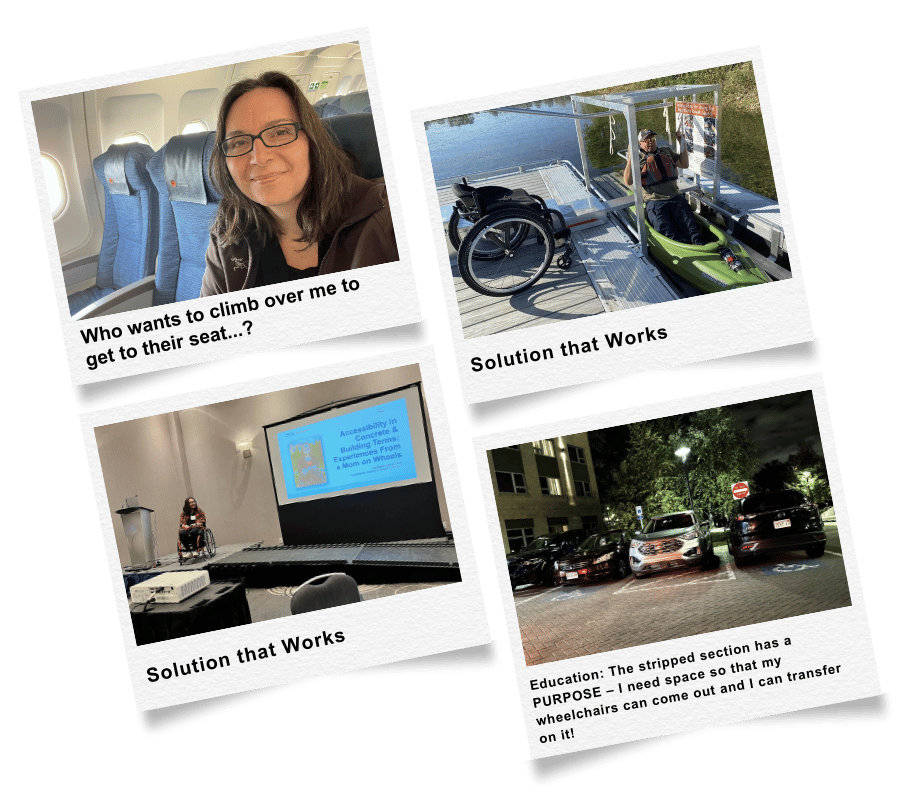
Une approche de photovoix adaptée pour une inclusion maximale
Récits visuels + expériences vécues = preuves puissantes pour favoriser le changement
Comprendre Notre Approche
Cette recherche utilise une méthode de photovoix adaptée — une approche de recherche participative qui place l’appareil photo (ou l’enregistreur vocal, ou le stylo) entre les mains des personnes ayant une expérience vécue. Plutôt que les chercheurs déterminent ce qui est important, les parents en situation de handicap documentent leurs propres réalités, interprètent leurs propres expériences et orientent la discussion sur les changements nécessaires.
Notre approche participative et dirigée par la communauté veille à ce que les parents en situation de handicap ne soient pas simplement des sujets de recherche, mais bien des co-chercheurs qui contribuent à façonner chaque aspect de ce projet
Qu’est-ce que la Photovoix?
L’Idée Centrale
La photovoix est une méthode de recherche participative qui utilise des photographies et des récits personnels afin d’explorer et de communiquer les expériences vécues au sein d’une communauté (Wang & Burris, 1997 ; Powers et al., 2012).
Dans une démarche de photovoix, les participants deviennent des co-chercheurs. Ils :
Prennent des photos (ou créent d’autres types de contenus) qui représentent leurs expériences ;
Partagent les histoires et les significations derrière ce qu’ils ont documenté ;
Interprètent collectivement les expériences et les thèmes qui émergent ;
Mettent en lumière les obstacles, les forces et les possibilités de changement.
Contrairement aux méthodes de recherche traditionnelles, où les chercheurs observent et interprètent les réalités vécues par les participants, la photovoix redonne le pouvoir de documenter et d’interpréter aux personnes directement concernées par ces expériences.
Comment Cette Méthode S’Intègre À Notre Projet
Dans le cadre de notre étude, la photovoix permet aux parents et aux proches aidants en situation de handicap de documenter visuellement leurs expériences liées à l’accessibilité — en montrant concrètement à quoi ressemblent l’inclusion et l’exclusion dans la vie familiale quotidienne.
Lorsqu’un parent ayant une limitation liée à la mobilité ne peut pas accéder à une aire de jeux avec son enfant, il ne fait pas que nous en parler : il nous le montre. Lorsqu’un parent sourd fait face à des obstacles de communication dans un bureau de passeports, il documente cette expérience. Lorsqu’un parent ayant une déficience intellectuelle découvre une mesure d’accessibilité qui facilite sa participation, il la capture afin de montrer ce qui fonctionne.
Cette documentation visuelle et narrative crée des données probantes concrètes et percutantes, qui permettent de rendre visibles des réalités qui ne peuvent être ignorées.
Pourquoi La Photovoix Est Importante
La photovoix vise à :
→ Donner aux individus le pouvoir d’exprimer des expériences souvent négligées dans les méthodes de recherche traditionnelles
→ Favoriser le dialogue entre les communautés, les chercheurs et les décideurs politiques
→ Favoriser des changements sociaux et structurels grâce à la narration visuelle et à la mobilisation communautaire
→ Mettre au centre l’expertise et les connaissances des personnes en situation de handicap
Comme le soulignent certains chercheurs : « Les images révèlent des obstacles liés à l’accessibilité que les questionnaires traditionnels ne permettent souvent pas d’identifier » (Labbé et al., 2021).
Origines Historiques
La photovoix a été développée dans les années 1990 par Caroline Wang et Mary Ann Burris comme une méthode de recherche-action participative. Elle a d’abord été utilisée dans des communautés rurales en Chine afin d’aider des populations marginalisées à documenter leurs réalités et à militer pour des changements. Depuis, cette approche a été adoptée à travers le monde.
Principes Fondamentaux
1. AUTONOMISATION
Les participants utilisent la photographie (ou d’autres formes de médias) pour exprimer leurs perspectives et leurs expériences avec leur propre voix, sans que celles-ci soient filtrées ou interprétées uniquement par les chercheurs
2. PARTICIPATION
Les membres de la communauté deviennent des co-chercheurs et contribuent à toutes les étapes de la recherche, de la conception du projet jusqu’à la diffusion des résultats.
3. RÉFLECTION CRITIQUE
Les images et les récits suscitent le dialogue et permettent aux participants et aux chercheurs de réfléchir aux structures sociales, aux obstacles et aux inégalités qui influencent les expériences vécues.
4. ACTION SOCIALE
Les résultats ne restent pas uniquement dans les publications scientifiques : ils sont partagés afin d’influencer les politiques, de sensibiliser la population et de favoriser une plus grande inclusion.
5. CONSIDÉRATION ÉTHIQUE
Le respect de l’autonomie, le consentement éclairé et la sécurité émotionnelle des participants sont au cœur de chaque étape du processus.
Pourquoi La Photovoix Correspond Parfaitement À Ce Projet
Capture Les Véritables Expériences Liées À L’Accessibilité
La photovoix permet aux parents et aux proches aidants en situation de handicap de documenter visuellement leurs interactions avec des environnements sous réglementation fédérale — des services de transport aux services offerts au public, en passant par les parcs nationaux et les bureaux de passeports.
Ces images révèlent ce que l’accessibilité signifie réellement dans la pratique:
Le bouton placé trop haut qu’une personne en fauteuil roulant ne peut pas atteindre ;
La rampe trop inclinée pour être utilisée de façon sécuritaire avec un enfant ;
La salle de toilette familiale qui ne possède pas de table à langer accessible ;
Les équipements de jeu qui excluent plutôt qu’ils n’incluent.
Les preuves visuelles et documentées permettent de rendre visibles des obstacles souvent invisibles.
02
01
Informe Les Normes Nationales D’Accessibilité
En combinant les récits personnels aux preuves visuelles, la photovoix produit des données concrètes pouvant directement soutenir les priorités de recherche et les recommandations politiques d’Accessibilité Standards Canada.
Les décideurs peuvent mieux comprendre :
À quoi ressemblent concrètement les obstacles dans les environnements réels
Les adaptations créatives développées par les familles
Ce que le terme « accessible » devrait réellement signifier
L’écart entre les politiques existantes et les réalités vécues
03
Favorise Une Participation Inclusive
Cette méthode s’adapte à différents modes de communication — photos, descriptions, notes vocales ou textes — afin d’assurer une participation équitable pour différentes situations de handicap et différents besoins linguistiques (français, anglais, ASL, LSQ).
Contrairement aux méthodes de recherche traditionnelles qui privilégient certaines façons de communiquer, la photovoix adaptée fonctionne pour :
Les personnes ayant une déficience visuelle (descriptions audio, notes vocales) ;
Les personnes ayant des limitations liées à la mobilité (méthodes de documentation flexibles) ;
Les participants sourds ou malentendants (documentation visuelle ne nécessitant pas d’audio) ;
Les personnes ayant une déficience intellectuelle (processus simplifiés, échéanciers flexibles) ;
Les personnes ayant différents niveaux de littératie (options alternatives à l’écriture).
04
Renforce La Collaboration Entre Les Communautés Et Les Décideurs
Les participants deviennent des co-chercheurs qui contribuent à identifier les obstacles, proposer des solutions et influencer la manière dont l’accessibilité est définie et évaluée au niveau fédéral.
Il ne s’agit pas d’une recherche réalisée sur les personnes en situation de handicap — mais bien d’une recherche réalisée avec et par les personnes en situation de handicap.
05
Soutient Les Valeurs D’Équité Et D’Inclusion
La photovoix s’harmonise avec l’engagement d’Accessibilité Standards Canada envers l’équité, l’inclusion et la reconnaissance de l’expertise issue de l’expérience vécue.
Cette approche veille à ce que les normes d’accessibilité soient façonnées par les personnes qui sont les plus directement concernées par celles-ci.
Exemples de Photovoix en action
La photovoix a été utilisée avec succès auprès de différentes populations, notamment :
Des mères ayant des limitations physiques afin de documenter les obstacles à l’inclusion sociale (Stone, 2021) ;
Des personnes ayant une déficience intellectuelle afin d’explorer leur participation au sein de la communauté (Anderson et al., 2023) ;
Des jeunes issus de communautés autochtones afin d’examiner les enjeux liés à la santé et au bien-être (Nykiforuk et al., 2011) ;
Des personnes âgées afin d’étudier les environnements adaptés aux besoins liés au vieillissement (Ronzi et al., 2016) ;
Des communautés marginalisées afin d’identifier des obstacles systémiques (Fricas, 2022 ; Chinn & Balota, 2023).
These projects have successfully:
Identifier des barrières non documentées
Influencer les décideurs politiques
Créer des changements significatifs grâce l’expérience vécue
Redonner du pouvoir aux participants pour devenir défenseurs de leurs droits
Exemples Concrets de Notre Équipe
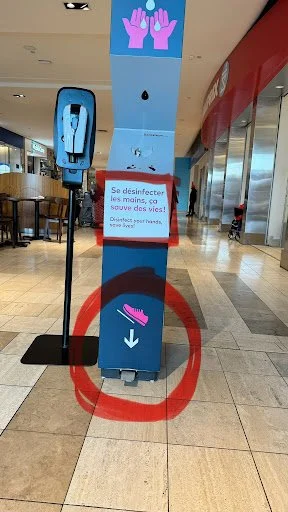
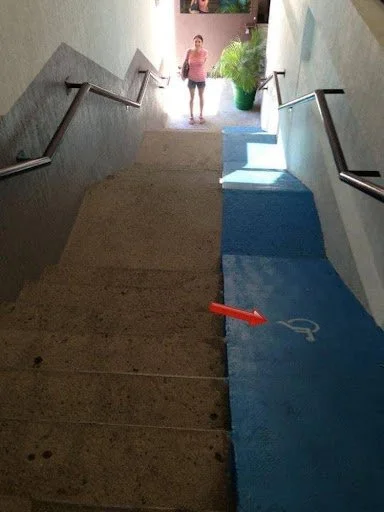
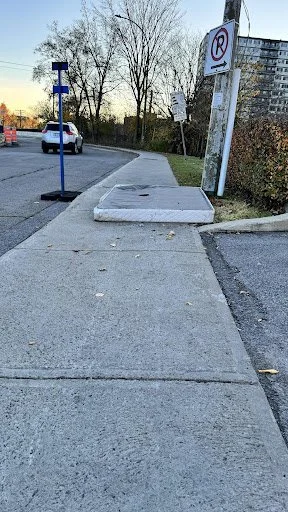
Voici des exemples du type d’obstacles liés à l’accessibilité et des solutions que la photovoix peut permettre de documenter :
Ces exemples démontrent que la photovoix permet de documenter non seulement l’existence des obstacles, mais également leur impact réel sur les familles dans des situations quotidiennes concrètes. La dimension émotionnelle — la frustration, l’humour, la résilience et les stratégies développées par les familles — devient visible d’une façon que les statistiques seules ne peuvent pas transmettre.
-
![Hand-activated sensor button placed too high on a shopping mall pillar]()
1. « Si seulement je pouvais APPUYER DESSUS !»
Contexte : Les dispositifs d’accessibilité qui sont installés, mais placés à des hauteurs inaccessibles pour les personnes en fauteuil roulant, créent une illusion d’accessibilité sans offrir une réelle fonctionnalité.
-
![Dangerous ramp with steep drop and no safety barriers]()
« Ouais, c’est ça… Je n’ai pas envie de mourir aujourd’hui ! »
Contexte : Les rampes qui ne respectent pas les normes de sécurité exposent les parents ayant des limitations liées à la mobilité et leurs enfants à des risques importants.
-
![Sidewalk with raised curb making rolling access impossible]()
« Belle utilisation du trottoir… mais impossible pour moi d’y circuler en fauteuil ! »
Contexte : Les améliorations aux infrastructures qui ne tiennent pas compte de la conception universelle excluent les personnes en situation de handicap des espaces publics.
-
![Person in mobility scooter unable to reach payment terminal]()
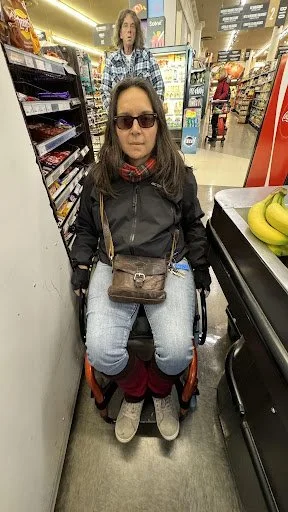
« Bon… je suppose que je ne paierai pas alors ! »
Contexte : Les comptoirs de service et les systèmes de paiement conçus sans tenir compte de la diversité des postures et des capacités physiques créent des obstacles inutiles à l’autonomie.
-
![Broken door handle with metal piece hanging out]()
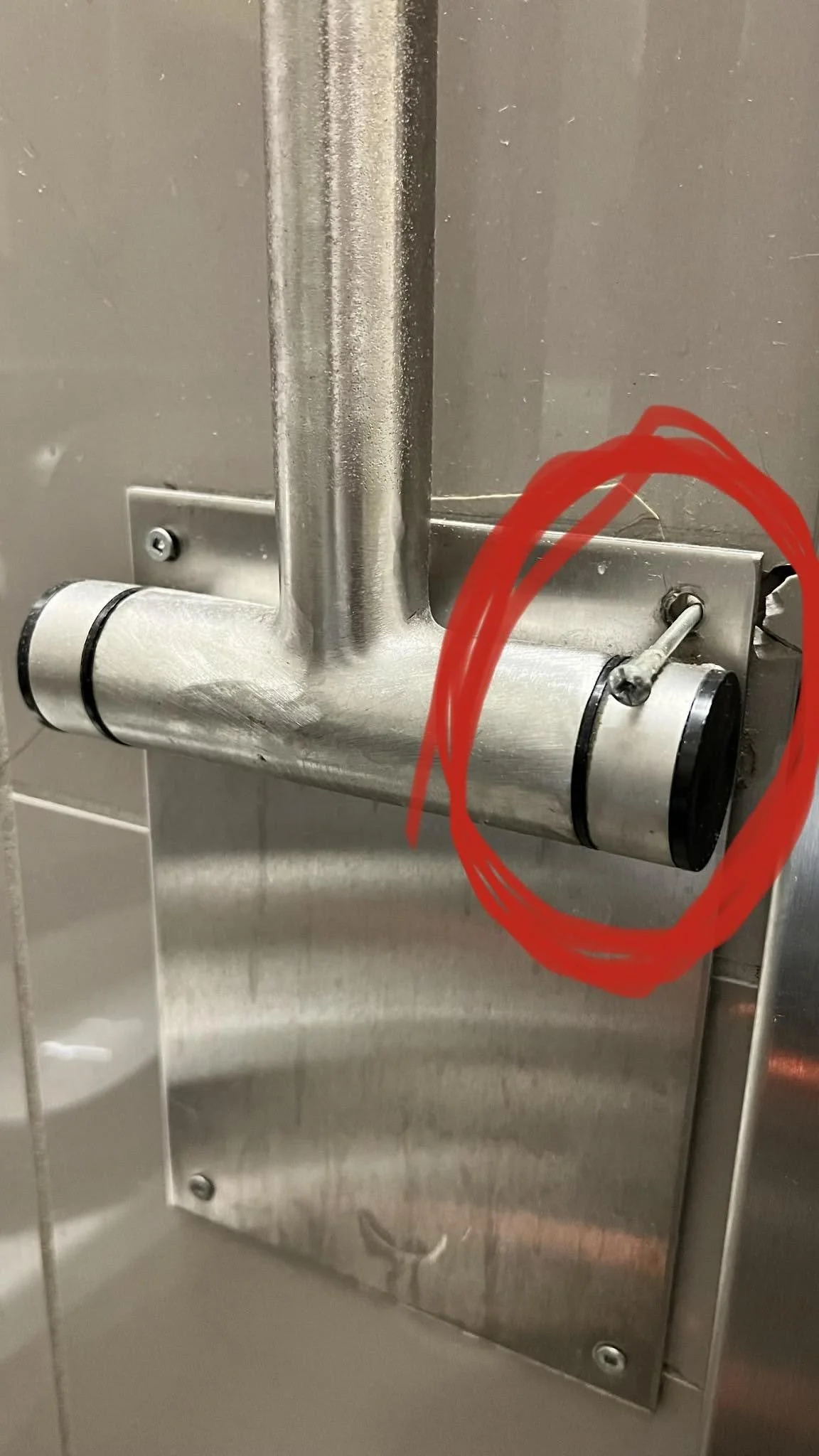
« C’est une chose de rendre un endroit accessible, mais pour assurer l’accès, il faut aussi l’entretenir ! »
Contexte : L’accessibilité ne se limite pas à l’installation initiale de mesures adaptées; un entretien continu est essentiel pour maintenir l’accès à long terme.
-
![Badly cracked sidewalk creating tripping hazards and obstacles]()
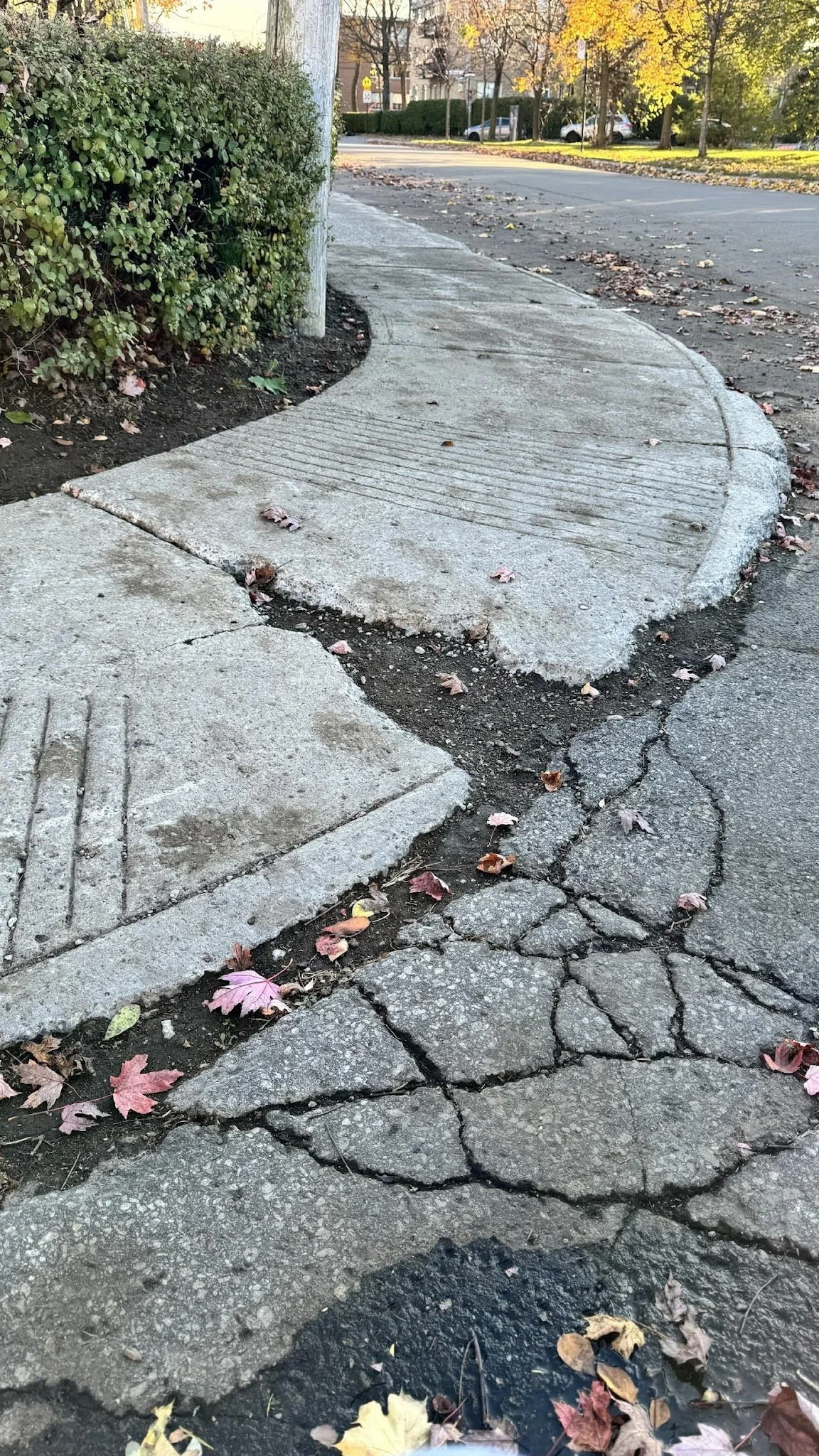
« C’est une chose de rendre un endroit accessible, mais pour assurer l’accès, il faut aussi l’entretenir ! »
Contexte : La détérioration des infrastructures affecte particulièrement les personnes ayant des limitations liées à la mobilité ainsi que les parents qui doivent gérer des enfants et de l’équipement.
-
![Parking lot at night with cars blocking accessible spaces]()
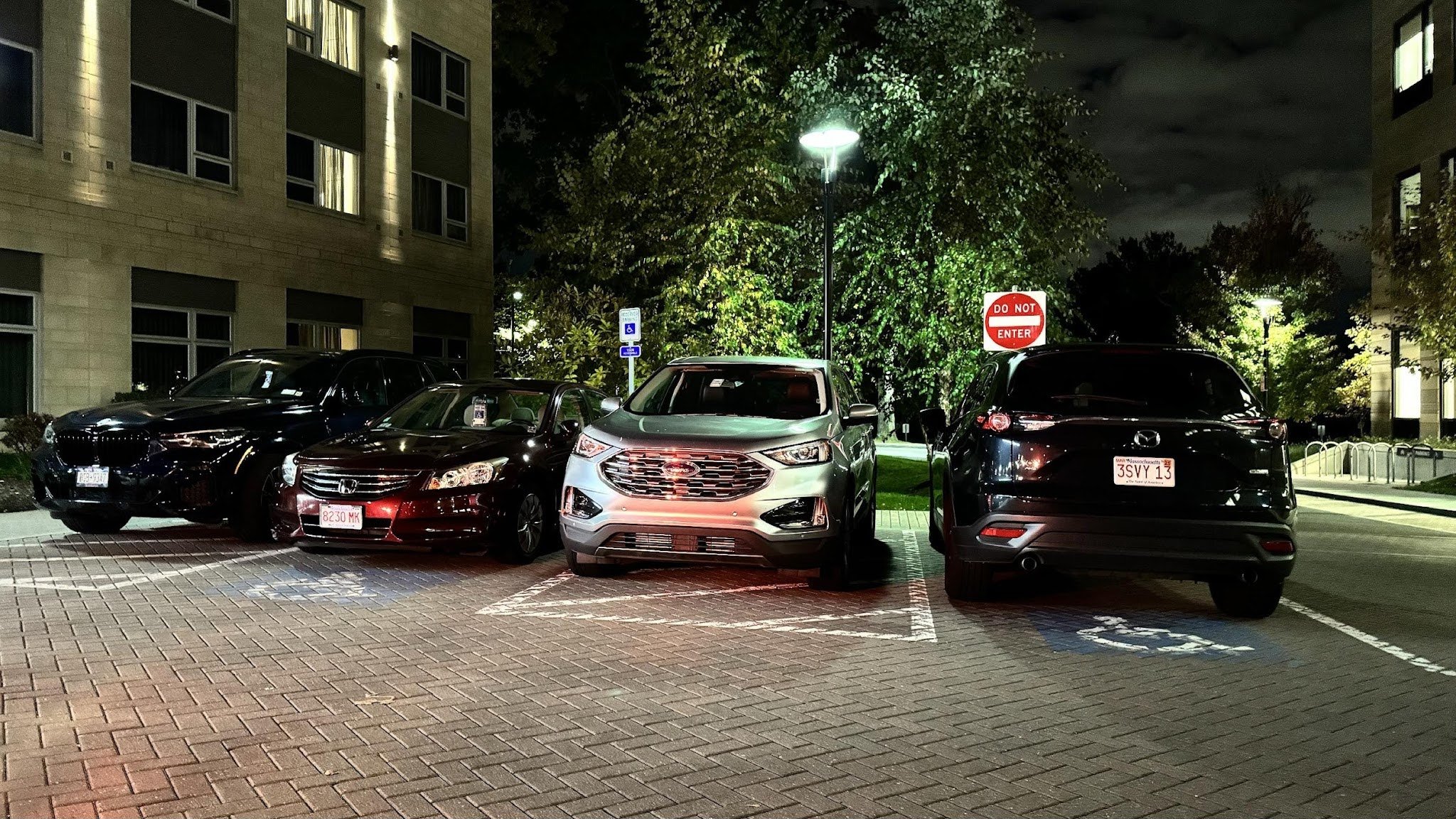
« Où suis-je censé me stationner, en tant que parent qui a besoin d’une place de stationnement accessible ? »
Contexte : L’application des règles concernant les places de stationnement accessibles est aussi importante que leur disponibilité.
-
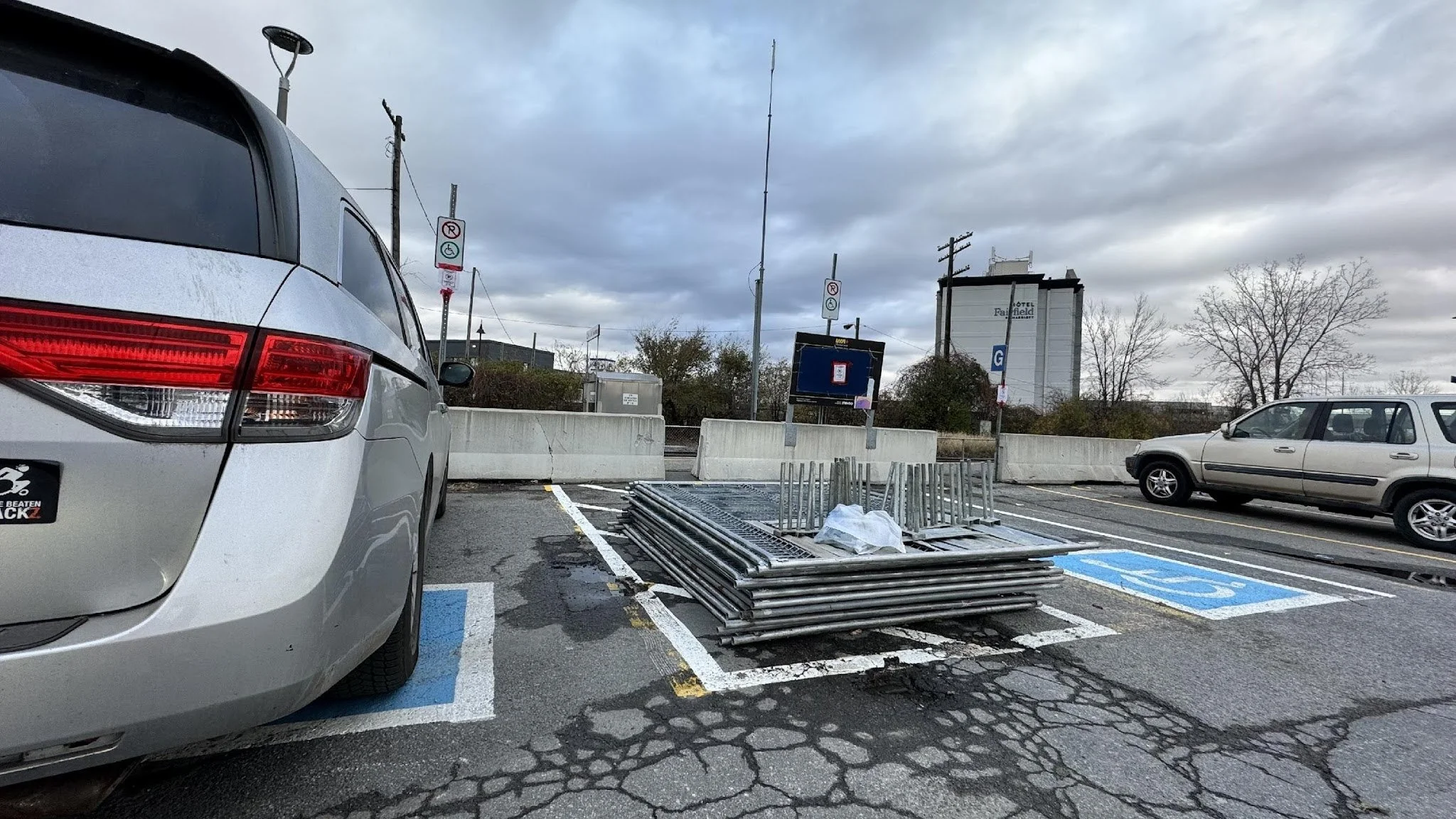
![Construction zone with metal fencing placed directly on accessible parking spot]()
« Où suis-je censé me stationner, en tant que parent qui a besoin d’une place de stationnement accessible ? »
Contexte : Les travaux temporaires éliminent souvent les places de stationnement accessibles sans offrir d’alternatives, en supposant que les personnes en situation de handicap peuvent simplement « se stationner ailleurs ».
Accessibilité dans la Vie Quotidienne
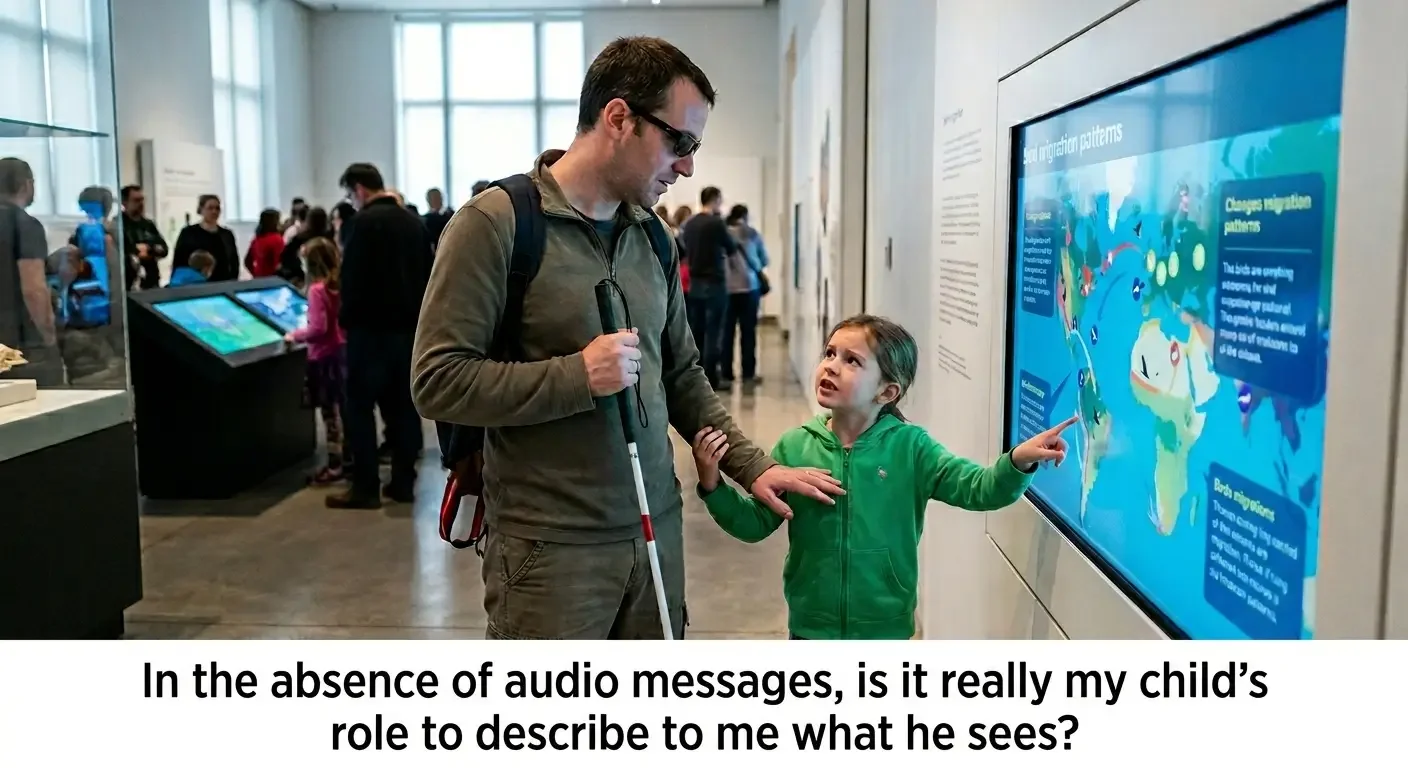
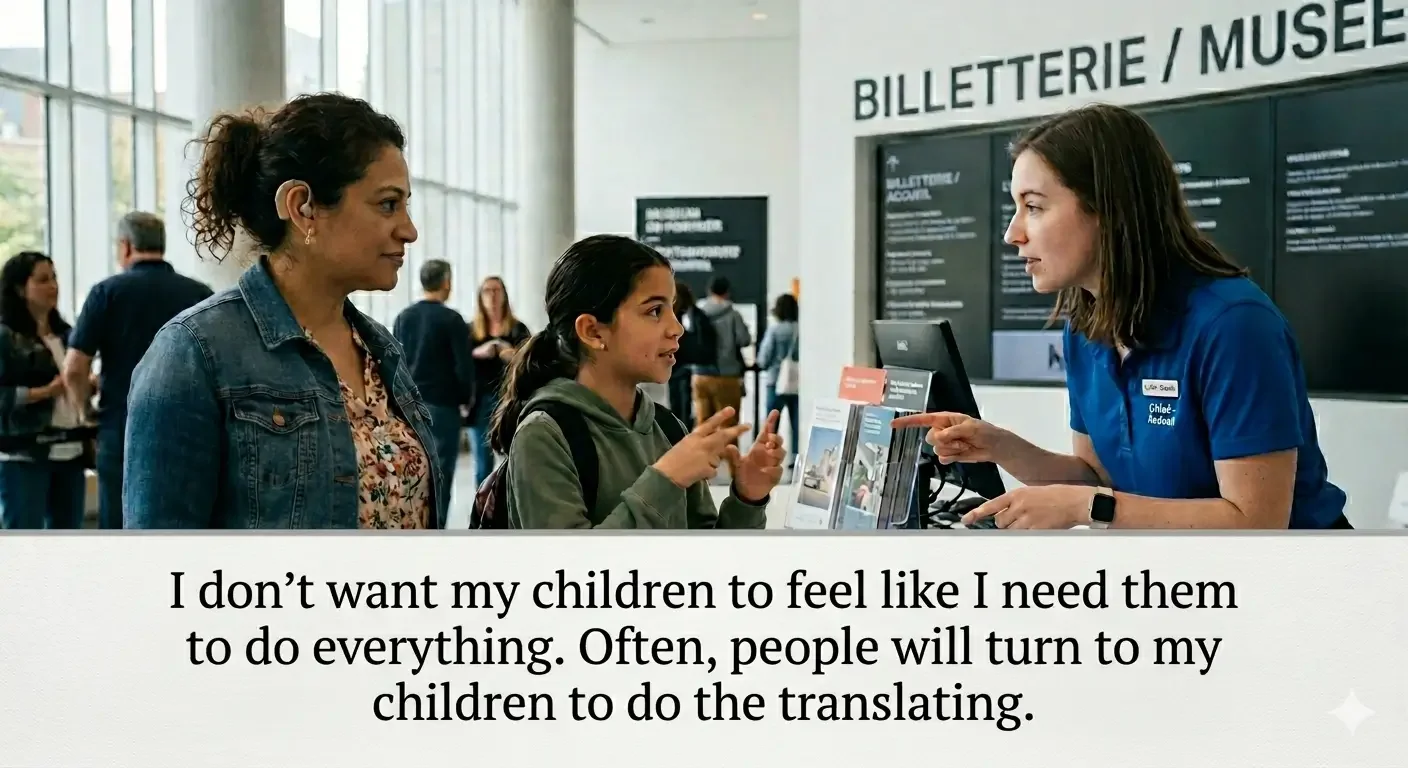
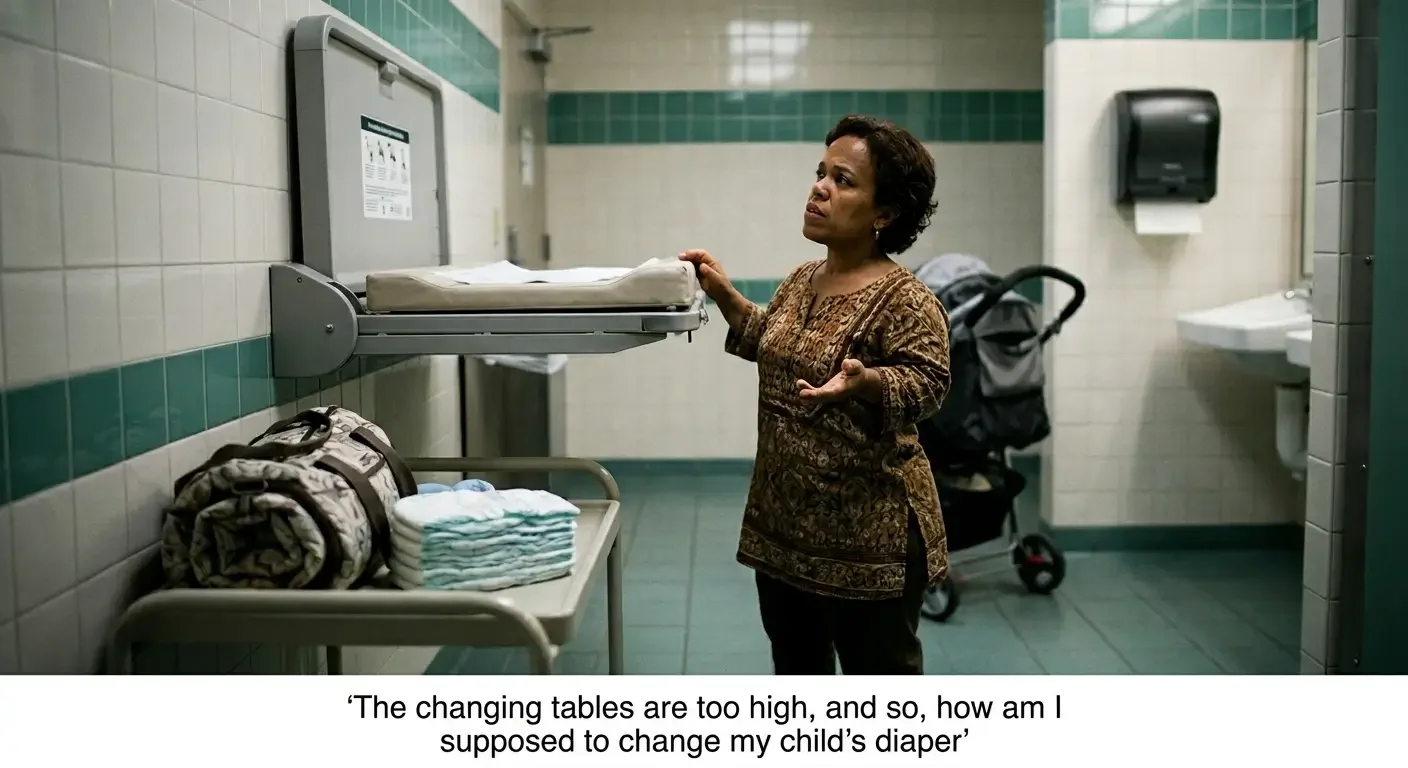
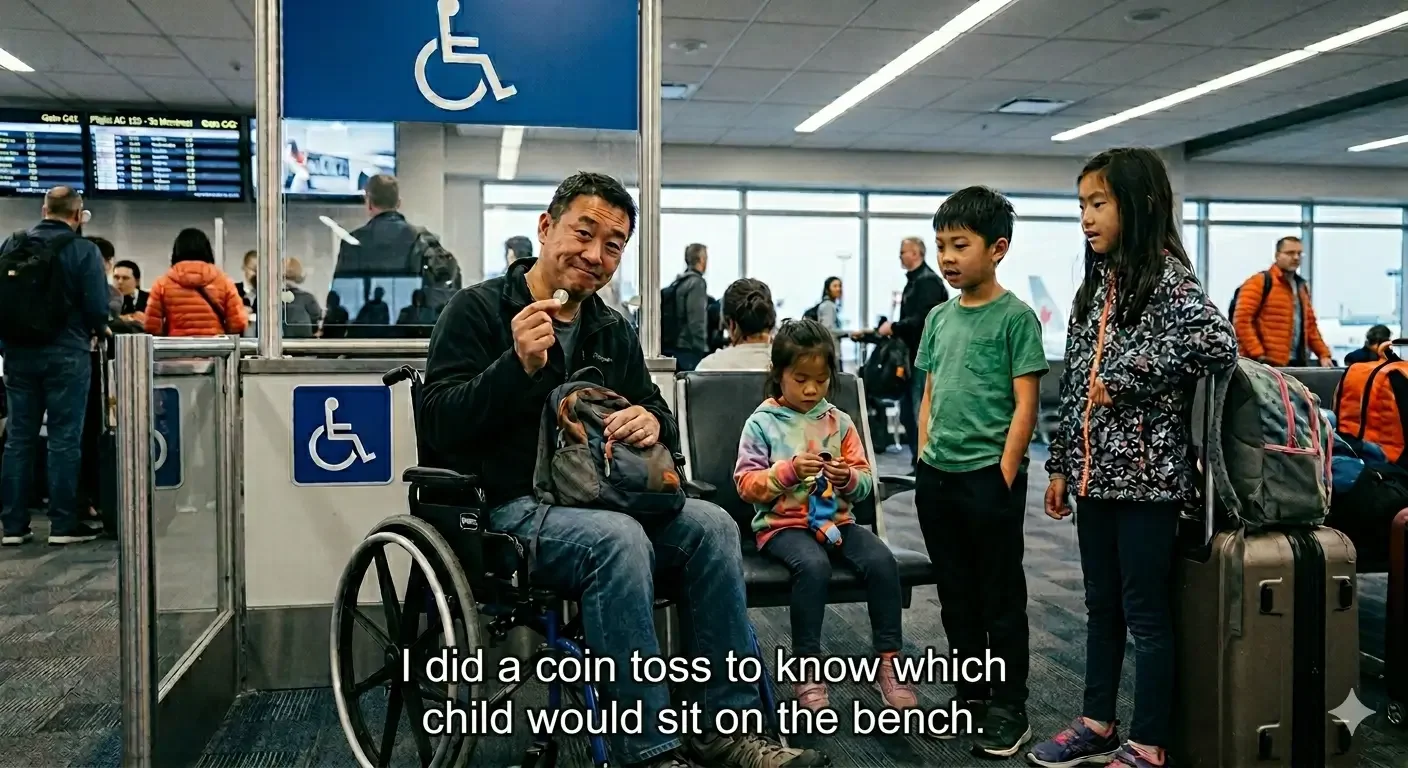
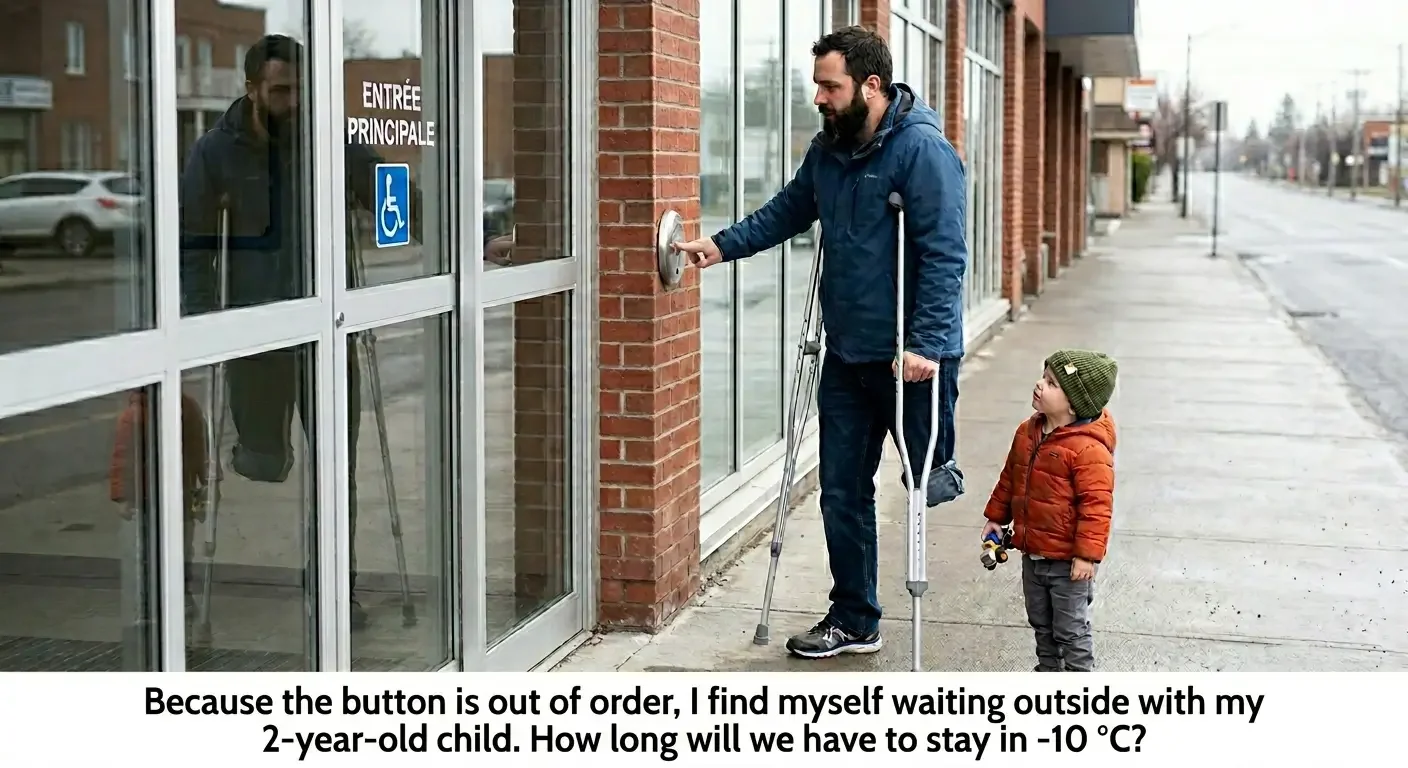
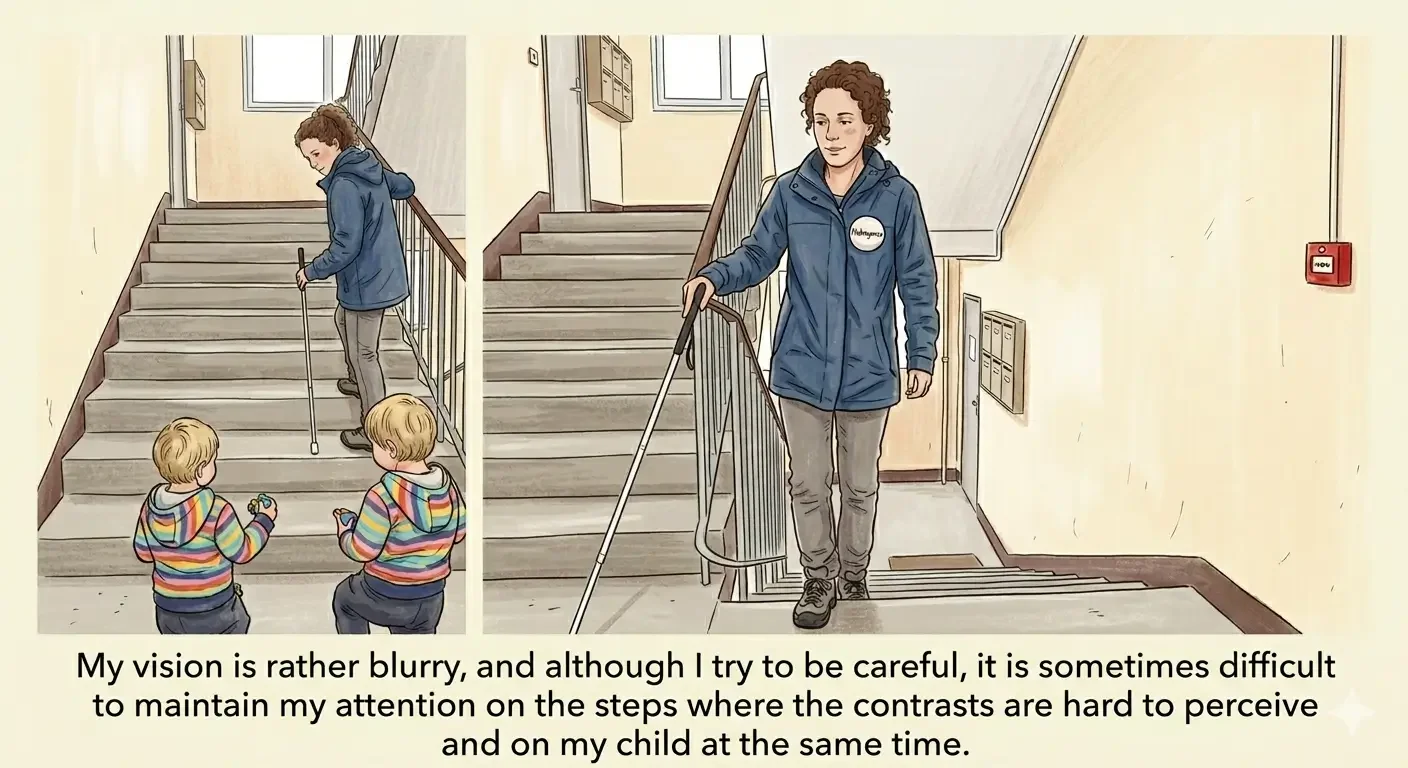
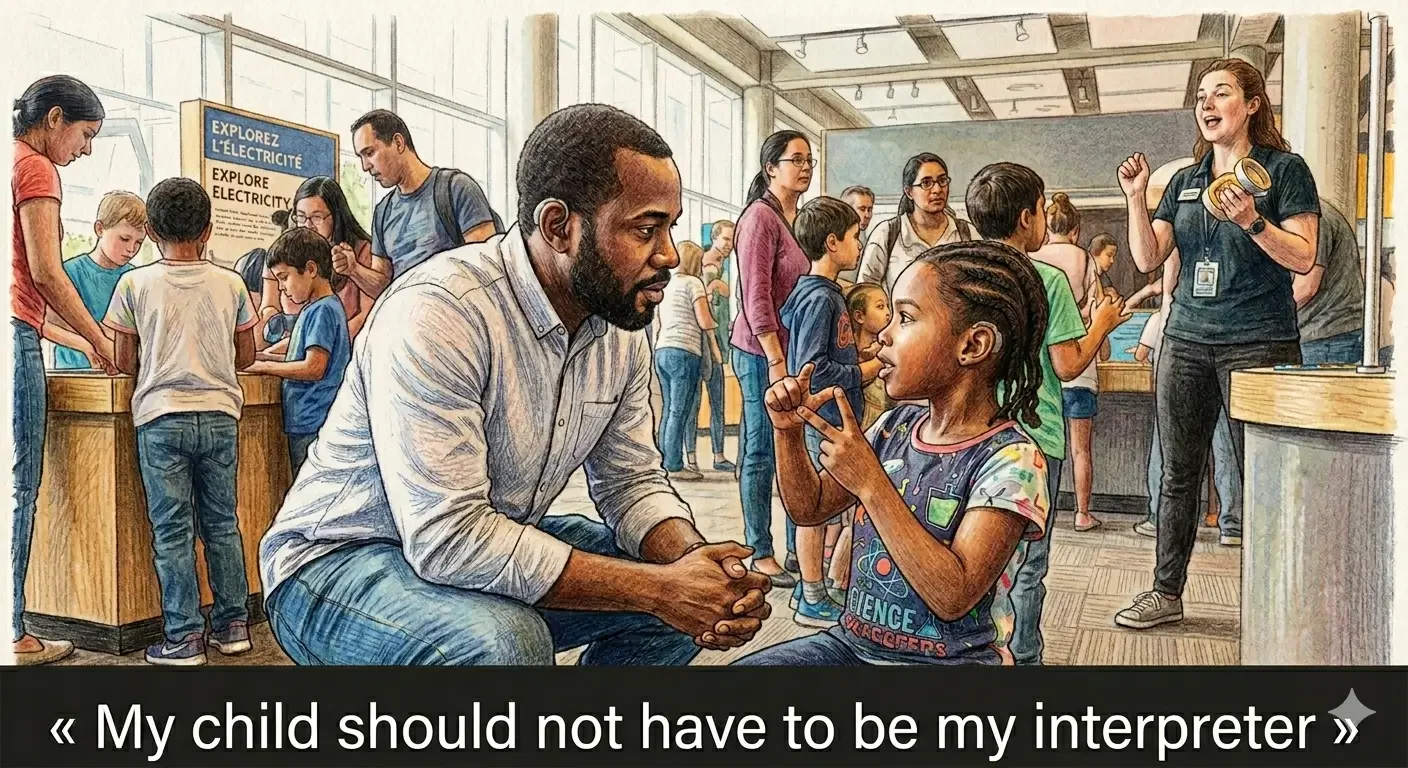
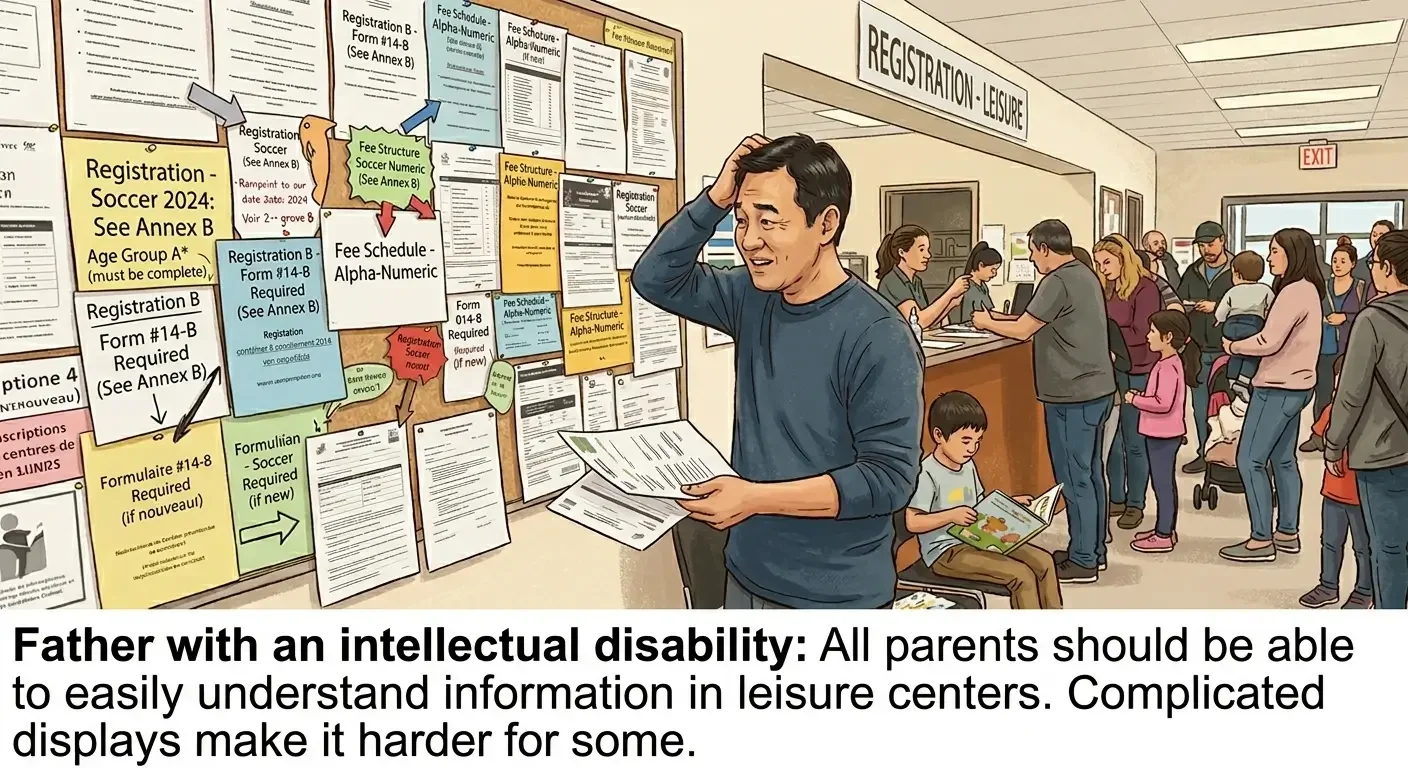
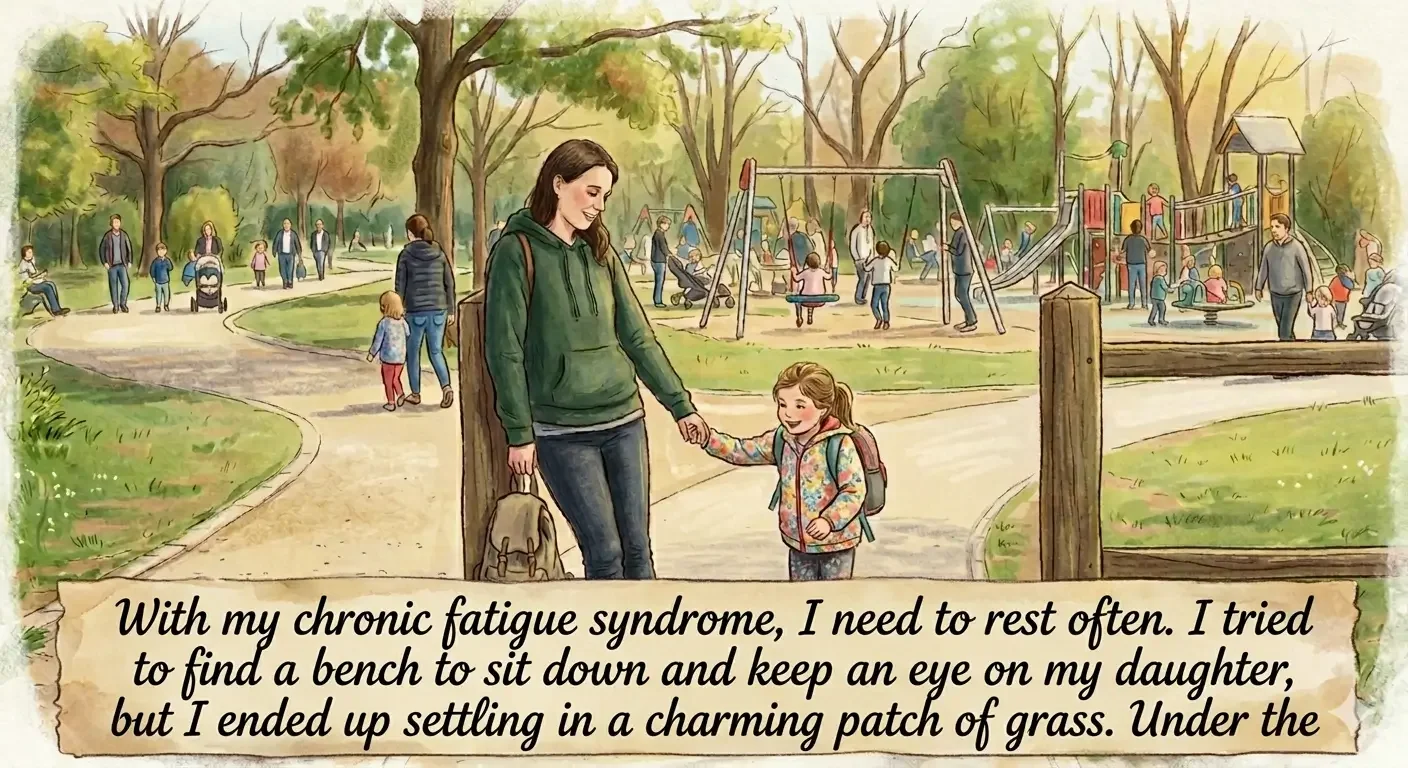
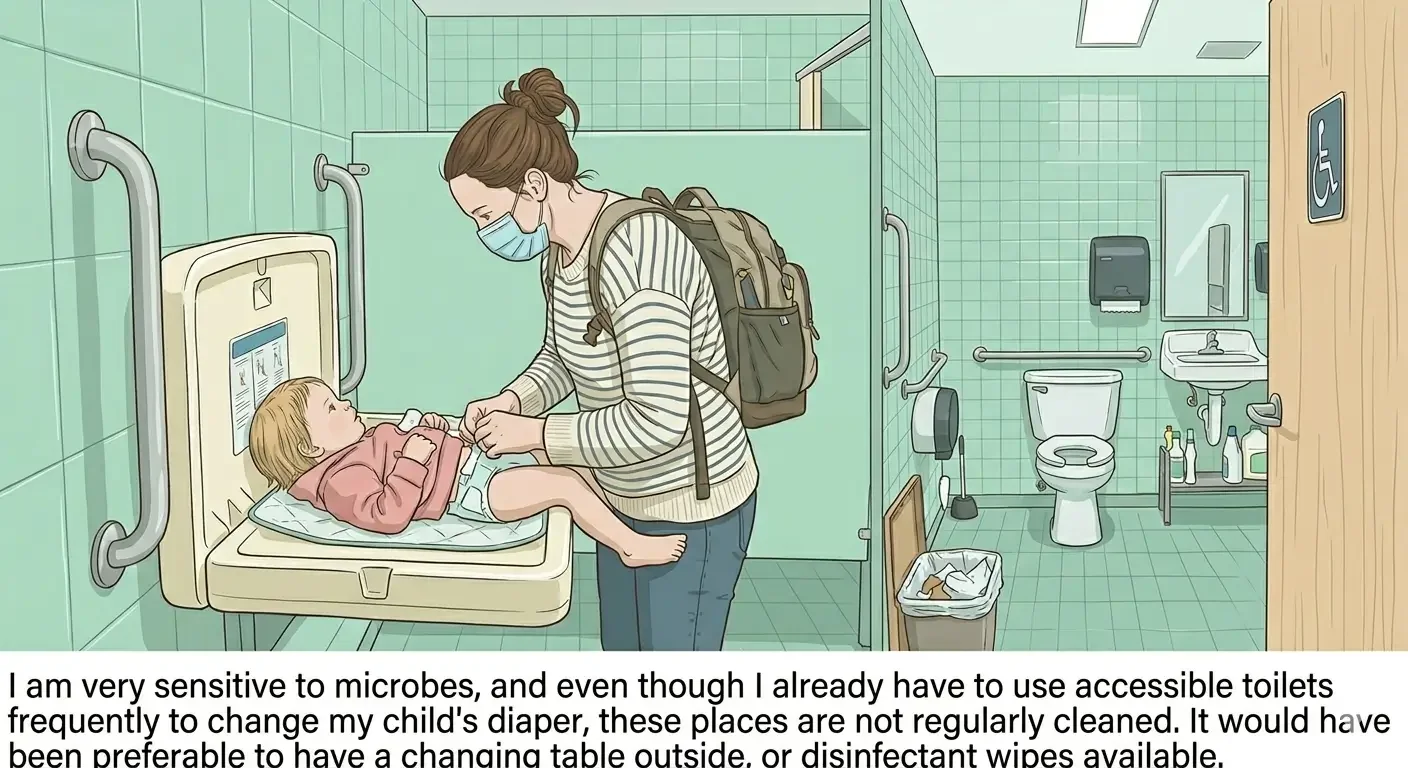
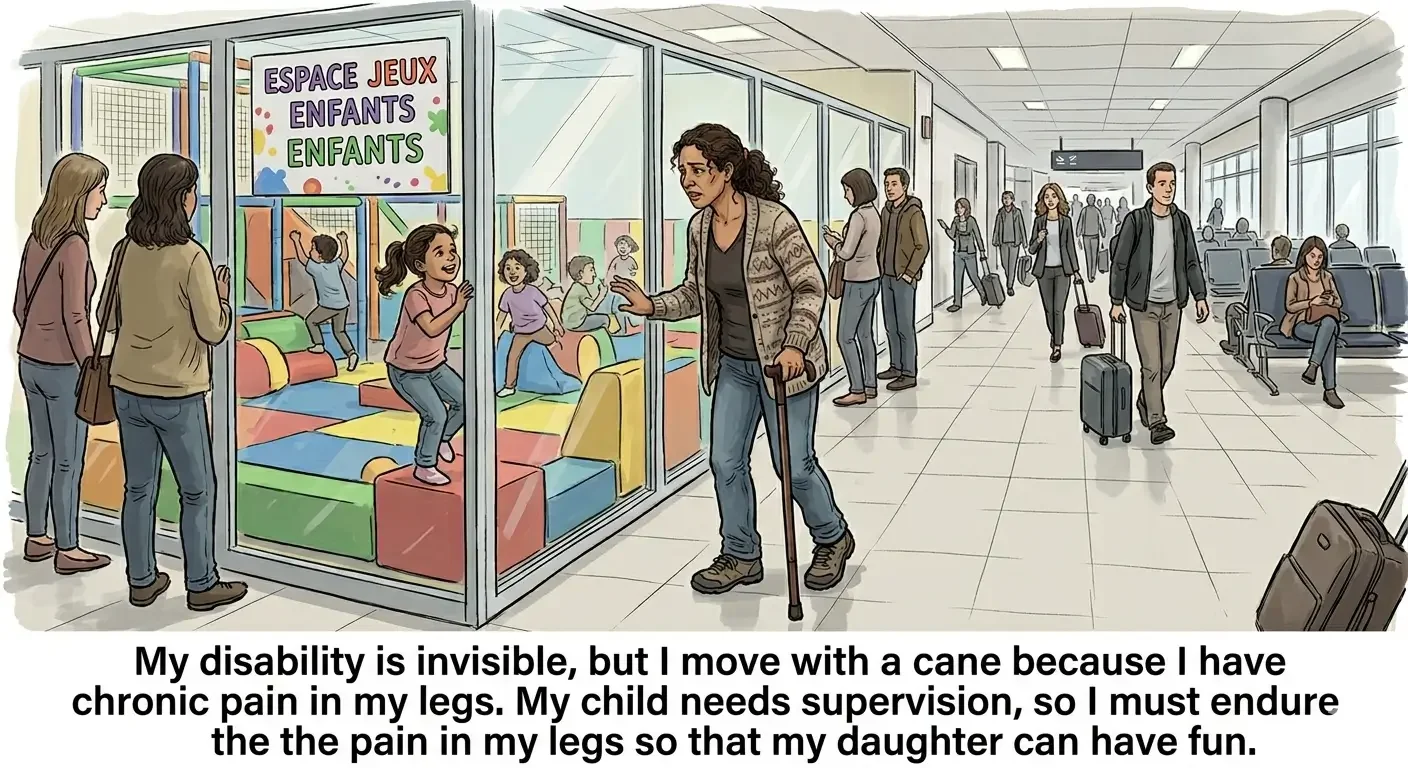
Ces images illustrent les défis réels liés à l’accessibilité ainsi que les possibilités de créer des communautés plus inclusives.
Photovoix Adaptée : Design pour l’Inclusion
La photovoix traditionnelle utilise principalement la photographie. Mais qu’en est-il des personnes qui :
Ont de la difficulté à utiliser un appareil photo ou pour qui prendre une photo n’est pas une option ;
Éprouvent des difficultés à manipuler une caméra ou un téléphone ;
Communiquent principalement à l’oral plutôt que par écrit (ou inversement) ;
Présentent des symptômes variables qui peuvent rendre la prise de photos difficile à certains moments ?
Notre approche de photovoix adaptée reconnaît que tous les parents en situation de handicap ne peuvent pas ou ne souhaitent pas nécessairement utiliser une caméra.
Plusieurs formats de documentation
-
Photos prises avec un téléphone intelligent ;
Photos prises avec un appareil photo ;
Captures d’écran ;
Images prises par une personne de soutien selon les indications du participant.
-
Descriptions audios des environnements (d’une durée maximale de 2 minutes) ;
Récits d’expériences racontés à voix haute ;
Notes vocales décrivant les obstacles rencontrés ;
Observations enregistrées.
-
Descriptions écrites (jusqu’à 500 mots) ;
Notes concernant les expériences vécues ;
Récits détaillés ;
Textes courts ou textes plus approfondis.
-
Explications vocales accompagnant les photos (jusqu’à 1 minute) ;
Descriptions enregistrées à l’oral ;
Mise en contexte racontée par le participant.
-
Les participants peuvent représenter des obstacles liés aux attitudes ou à l’environnement physique à travers des dessins ou d’autres formes d’expression artistique.
Pourquoi Cette Flexibilité Est Importante
Un parent ayant une déficience visuelle peut décrire un obstacle sans avoir à le photographier ;
Un parent vivant avec de la fatigue chronique peut enregistrer de courtes notes vocales plutôt que d’écrire de longues descriptions ;
Un parent sourd peut soumettre des photos sans composante audio ;
Un parent ayant des douleurs aux mains peut privilégier la communication orale plutôt que l’écriture ;
Un parent ayant une déficience cognitive peut choisir le format qui lui convient le mieux.
TOUTE COMBINAISON EST POSSIBLE
Les participants peuvent choisir et combiner différents formats selon :
Leurs besoins en matière d’accessibilité ;
Leurs préférences personnelles ;
La situation qu’ils souhaitent documenter ;
Ce qui leur semble le plus confortable au moment de la documentation.
Par exemple, un participant pourrait soumettre principalement des photos accompagnées de quelques notes vocales. Un autre pourrait utiliser surtout des descriptions écrites. Chaque contribution est unique et a la même valeur.
CE QUE LES PARTICIPANTS DOCUMENTENT
-
Aéroports, gares ferroviaires et terminaux de traversiers
Acheter des billets et traverser les processus d’embarquement
Gérer les bagages, les enfants et les aides à la mobilité
Se déplacer dans les points de contrôle de sécurité
Accéder aux toilettes et aux installations familiales
Faire face aux annulations ou aux changements de dernière minute
-
Accessibilité des aires de jeux
Accessibilité des sentiers pour les familles utilisant des équipements de mobilité
Aires de pique-nique et de repos accessibles
Stationnement et accès aux installations accessibles
Disponibilité d’équipements accessibles (ex., poussettes adaptées)
-
Se déplacer dans les expositions avec des enfants
Accéder aux boutiques de souvenirs avec des poussettes ou des aides à la mobilité
Accéder aux toilettes familiales
Utiliser des installations interactives conçues pour les enfants
Interactions avec le personnel et soutien offert
-
Banques (ouvrir un compte pour ou avec un enfant)
Bureaux des passeports (remplir les formulaires, se présenter avec des enfants)
Édifices gouvernementaux (accéder aux services en tant que parent)
Interactions avec les employés du gouvernement fédéral
Attitudes et préjugés du personnel envers les personnes en situation de handicap
-
Les participants documentent :
BARRIÈRES : Ce qui ne fonctionne pas, ce qui est absent ou insuffisant, et ce qui représente une difficulté.
FACILITATEURS : Ce qui fonctionne bien, les éléments qui facilitent l’accès, les solutions positives et les adaptations créatives.
Cette approche équilibrée nous permet d’identifier à la fois les pratiques à éviter et celles qui méritent d’être reproduites
Qui Peut Participer ?
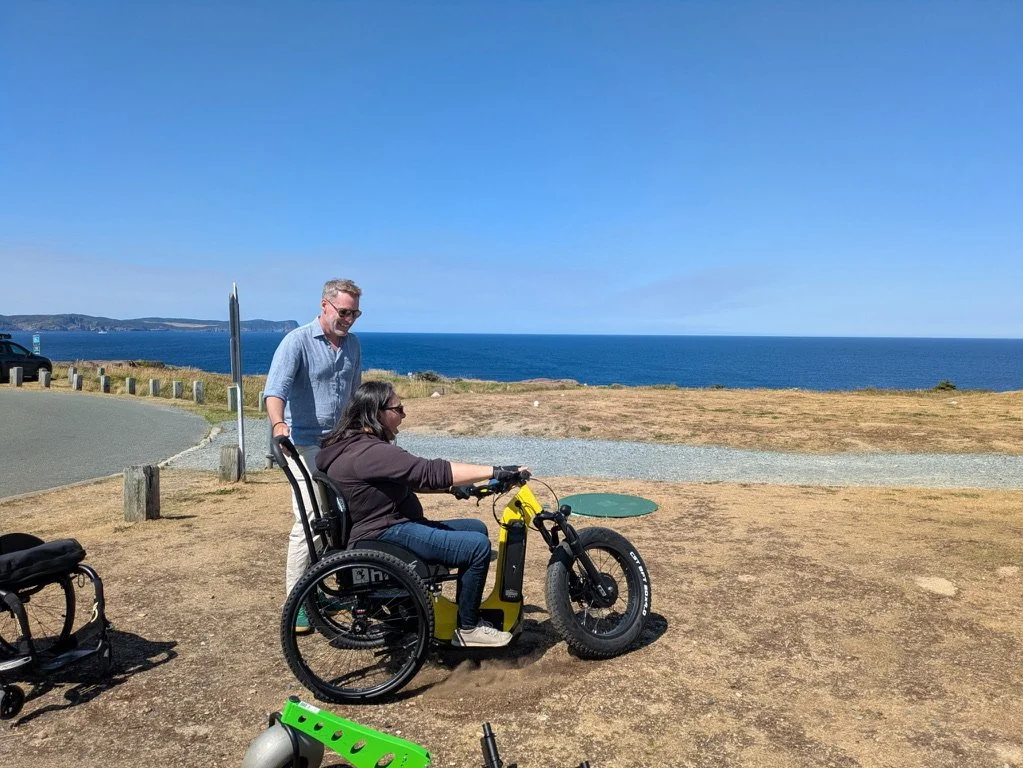
Photo credit: Justice Ferreira
Vous pouvez participer si vous êtes :
Parent ou proche aidant principal d’au moins un enfant mineur (âgé de moins de 18 ans).

Une personne vivant avec au moins l’une des situations de handicap suivantes :
Handicap lié à la mobilité (douleur, flexibilité, dextérité, différences liées à la mobilité)
Handicap auditif ou personne s’identifiant comme sourde
Handicap visuel ou personne s’identifiant comme aveugle
Handicap cognitif (apprentissage, mémoire, déficience intellectuelle ou développementale)
Toute combinaison de ces situations de handicap
Résider au Canada (dans une province ou un territoire).
Avoir visité ou utilisé des espaces sous réglementation fédérale avec votre ou vos enfants (par exemple : parcs nationaux, aéroports, musées, banques, bureaux de passeport, trains, autobus interprovinciaux ou traversiers).
Nous Encourageons Particulièrement La Participation De :
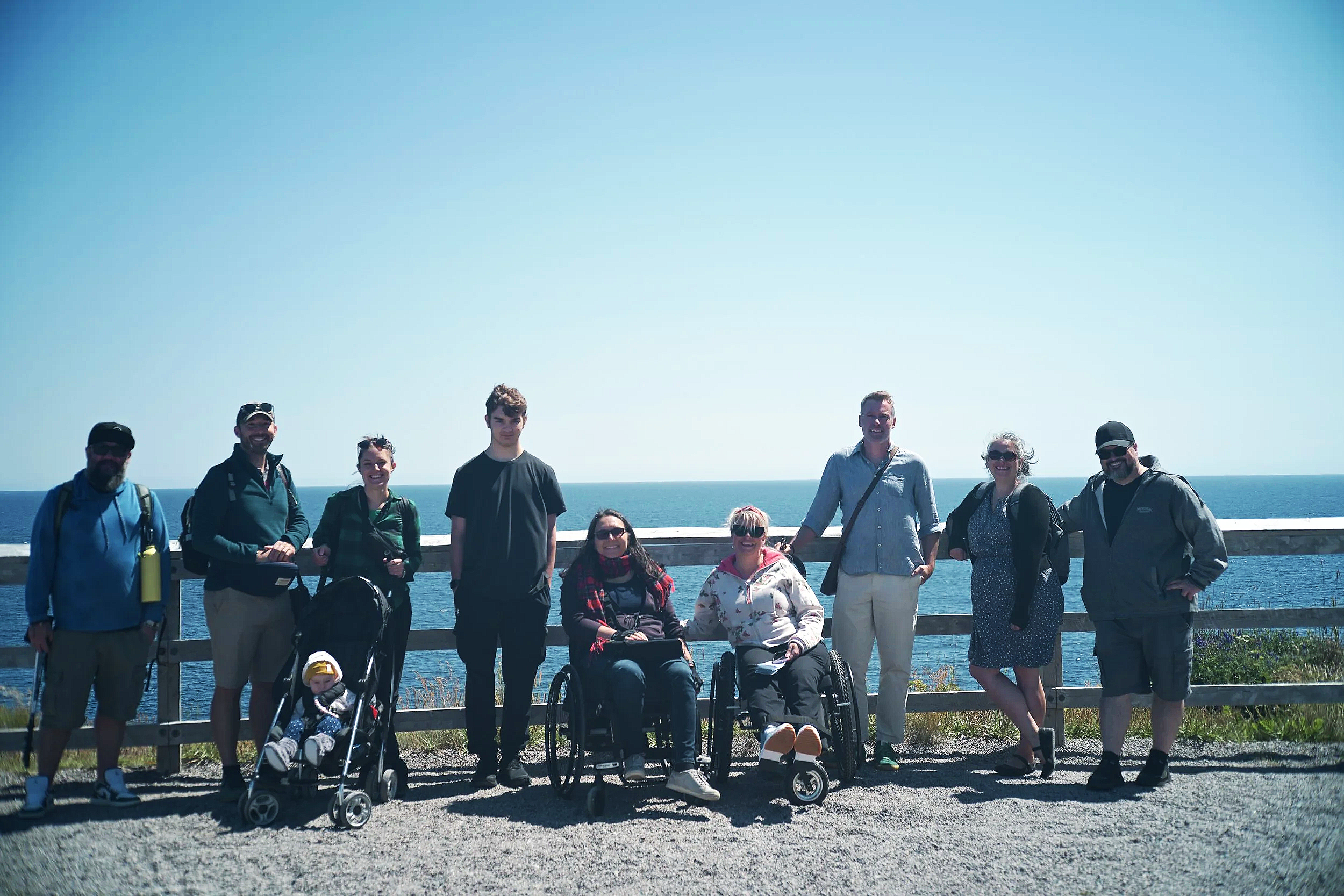
Photo credit: Justice Ferreira
Parents ayant des identités intersectionnelles ou vivant différentes formes de marginalisation
Parents et proches aidants autochtones
Parents issus de diverses origines ethniques et culturelles
Parents vivant dans des communautés rurales ou éloignées
Parents de toutes les identités de genre
Parents provenant de différents milieux socioéconomiques
Parents monoparentaux
Parents issus de diverses configurations familiales
Parents immigrants et nouveaux arrivants
Références
Anderson, S., et al. (2023). Photovoice with people with intellectual disabilities...
Braun, V., & Clarke, V. (2006). Using thematic analysis in psychology.
Chinn, P., & Balota, D. (2023). Visual narratives from marginalized communities...
Fricas, J. (2022). Photovoice and social inclusion...
Labbé, D., et al. (2020). Participatory research through photovoice...
Labbé, D., et al. (2021). Visual evidence in accessibility research...
Nykiforuk, C., et al. (2011). Photovoice with Indigenous youth...
Powers, L. E., et al. (2012). Participatory action research in disability studies...
Ronzi, S., et al. (2016). Photovoice and older adults...
Stone, E. (2021). Mothers with physical disabilities and photovoice...
Wang, C., & Burris, M. A. (1997). Photovoice: Concept, methodology, and use...