
Comment adaptons-nous la méthode Photovoice pour qu’elle soit accessible à toutes et à tous ?
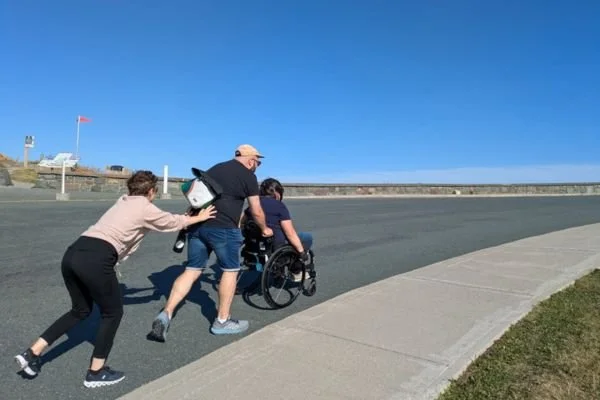
Disability-led research isn't just a buzzword—it's a fundamental shift in who holds power in the research process.
The Challenge
When researchers without disabilities study disability, we often perpetuate the same problems we're trying to solve. Questions get framed wrong. Access needs get overlooked. Solutions miss the mark. And the expertise of people with lived experience gets treated as "data" rather than leadership.
We're committed to doing this differently.
What Disability-Led Actually Means
1. DECISION-MAKING POWER
Parents with disabilities aren't just participants—they're on our steering committee. They don't just answer our questions; they decide what questions to ask.
Concretely, this means:
Steering committee members shape the research design
Parents with disabilities approve all research materials
Community partners guide recruitment strategies
Participants control how their materials are used
Parents with disabilities co-author publications
2. COMPENSATION AND RECOGNITION
Expertise deserves compensation. Parents with disabilities who serve on the steering committee receive honoraria for their time and intellectual contribution—not just token "thank you" gift cards.
We recognize:
Time spent in meetings is work, not volunteering
Lived experience is expertise worth paying for
Childcare, transportation, and access costs are real barriers
Academic credit goes to community co-researchers
3. ACCESSIBLE BY DESIGN, NOT AS AFTERTHOUGHT
We didn't design the "regular" research and then add accessibility. We started with accessibility and built everything around it.
This means:
Multiple formats for every material (visual, audio, text)
Flexible participation options
Meeting times that work for participants, not researchers
Technology choices guided by access needs
Ongoing check-ins about what's working
4. POWER TO SAY NO
True partnership means participants can decline, disagree, or change their minds without consequence.
Parents in our project can:
Refuse to answer questions
Withdraw from the study
Change what materials they share
Disagree with researcher interpretations
Critique our process
This isn't a problem—it's how we know we're doing it right.
5. BEYOND TOKENISM
Having one person with a disability on a research team isn't disability-led research. We've built this project so that:
Multiple researchers have disabilities
Partner organizations are disability-led
Steering committee has majority disabled members
Parents with disabilities outnumber non-disabled researchers in decision-making
Disability justice principles guide every choice
Why This Is Hard (And Why We Do It Anyway)
Disability-led research takes more time. It costs more money. It requires researchers to give up control. It challenges academic conventions.
Universities want quick timelines. Funders want efficiency. Academic culture rewards individual achievement over collaboration.
But fast research isn't good research when it excludes the people most affected.
We're building something different:
Research that moves at the speed of trust
Partnerships that last beyond one grant
Knowledge that actually serves disabled communities
Change that disabled people lead
What We're Learning
After [X months] of this project, we're learning:
Parents with disabilities have better ideas than we do—they know what questions matter
Accessibility for one person often benefits everyone
Flexibility isn't a weakness in research design; it's a strength
The best insights come from the messiest, most honest conversations
Disabled parents are phenomenal co-researchers
We're also learning where we fall short:
[Specific example of what's not working perfectly]
[How we're addressing it]
[What we're changing moving forward]
Accountability Through Transparency
We're sharing our process—including mistakes—because disability-led research requires accountability.
We invite critique. We welcome questions. We commit to:
Regular updates on this blog
Honest reporting about challenges
Changing our approach when community partners tell us to
Crediting the ideas and labor of disabled collaborators
This Is Movement Work, Not Just Research
Ultimately, we're not just studying accessibility—we're participating in the disability rights movement.
Every time a parent with a disability shapes our research questions, challenges ableist assumptions, or asserts their expertise, they're exercising power that society tries to deny them.
That's what disability-led research means: shifting power, centering expertise, and building the world we want to see.